top of page
Butterfly populations are a very good indicator of the health of an area's ecosystem !!


Polygonia egea, the southern comma, is a butterfly of the family Nymphalidae.
They are found in southern Europe, notably on the Greek isle of Crete.
They are a species that is fond of hot dry places.
They frequent walls, cliffs and rock faces where the larval foodplant grows. (These places are often extremely hot in summer !!)
They are seen on wing from March to September depending on the location.
They fly throughout the summer in 2 or 3 generations and hibernates as adults, emerging in early spring.
They enjoy resting on rock faces or walls at elevations of 0 - 1500 m., where they bask in the bright sunshine.
They generally bask with heads facing downwards.
They loves nectar rich flowers such as Red Valerian and Dwarf Alder.
Their wings are strongly dentate and narrow, and the ventral side is thinly marmorated and penciled.
On the forewing, the dorsal side is light brown colored with small dark markings in the cell.
The ventral side is also light brown with grey shades.
On the hindwing, both sides are similar to the forewing, but on the ventral side, there is an additional white mark resembling the letter “L" at the end of the cell.
They exhibit characteristically quick flight and they rest very often with open wings on the ground, on walls, etc.
Males are territorial and adopt perching positions on walls, rocks, etc.
They are generally considered to be "leaf mimics", using their ventral side wings, when roosting, to resemble leaves, and discourage potential predators.
Polygonia egea has most recently been assessed for The IUCN Red List of Threatened Species in 2013. They were then listed as (LS) Least Concern.
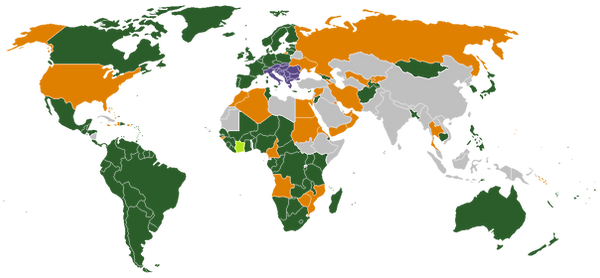
Avg. wingspan: 4.5 – 5 cm / 1.77 – 1.97 “.
Diet: larvae feed on Parietaria Officinalis in Europe. In the Transcaucasus they feed on Parietaria judaica and in Turkey they feed on Parietaria and Urtica.
Diet: adults prefer nectar rich flowers such as Red Valerian and Dwarf Alder.
Family: Nymphalidae (Brush Footed)
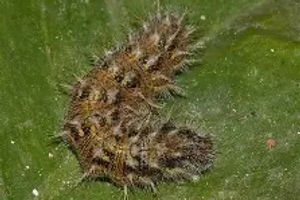
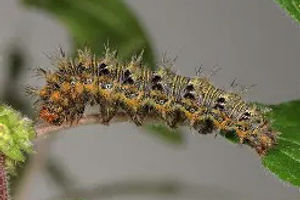
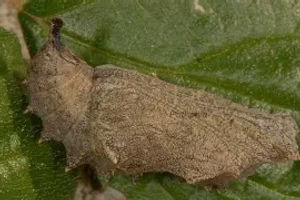
The single biggest threat to butterfly survival is habitat destruction!!
bottom of page