top of page
Butterfly populations are a very good indicator of the health of an area's ecosystem !!


Known as the Grey or the Gray Comma.
Polygonia progne can often be found near dirt roads and stream beds.
Most often they are found in hilly terrain or canyon lands.
In midafternoon, males perch on trees or shrubs at the edges of clearings to wait for females that they will mate with if the females are receptive.
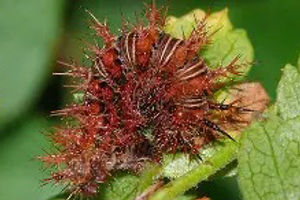
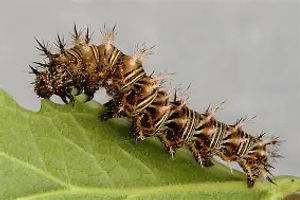
Eggs are laid singly on leaves of host plants, the caterpillars will feed underneath.
Adults are on wing twice per year, once in April and May and the other in June and August.
During the first flight the adults mate and lay eggs.
These eggs will hatch and become the summer generation.
The summer generation's eggs will hatch in October and hibernate.
The top of the wings is bright orange brown while the summer forms often have a dark border on the hindwing.
Both winter and summer forms have few yellow spots on their wing borders.
The ventral side of the wings have L-shaped silver markings and are charcoal gray.
They are easy to identify if you can see the ventral side.
it is charcoal gray with many fine dark streaks, and the comma marking is L-shaped and narrows to a fine point at each end.
The Nature Conservancy Global Rank is G5 - Demonstrably secure globally, though they may be quite rare in parts of their range, especially at the periphery.
There are no management needs reported.
Conservation is not usually required.
Avg. Wingspan: 4.4 - 6.3 cm / 1.73 – 2.48 “.
Diet: larva feed on Gooseberry and Azelia.
Diet: adults feed primarily on tree sap and decaying fruit. They seldom take plant nectar. They will also “puddle” on wet ground to get salt and other important minerals from the soil.
Family: Nymphalidae (Brush Footed)

The single biggest threat to butterfly survival is habitat destruction!!
bottom of page