top of page
Butterfly populations are a very good indicator of the health of an area's ecosystem !!


Also known as the Hop Merchant or the Comma Anglewing.
Polygonia comma, from the family Nymphalidae, is a North American butterfly that may be spotted in woods near rivers, ponds, marshes, swamps, and other water sources.
Durable, charming and ragged around the edges, the comma is one of the few butterflies that is becoming more widespread, most likely due to global warming.
They are generally considered to be leaf mimics, appearing to predators to be leaves when they are seen with their wings closed, causing the predators to ignore them.
Another intriguing aspect of the Eastern Comma is its remarkable adaptability to varying climates, which is reflected in its seasonal wing pattern changes.
This adaptability allows the species to thrive in a wide range of environmental conditions, showcasing the complexity of its evolutionary biology.
Eastern comma caterpillars are sometimes found on hops.
For this reason, farmers once called this butterfly “the hop merchant.”
They believed that they could predict the future price of hops by the silver and gold spots on the butterfly's chrysalis.
If the spots were gold, hop prices would be higher; if the spots were silver, hop prices would be lower.
They are a seasonally variable species.
The dorsal side of the summer form's hindwings are all black, whereas the winter form’s hindwings are reddish orange.
The ventral side of both forms is striped with dark and light brown.
There is a small silvery shaped comma mark in the middle of the hindwing in both forms.
They are slightly smaller than their close relatives, the Question Mark butterflies.
Overwintered adults fly and lay eggs in the spring until the end of April.
The summer form emerges and flies from May -September, laying eggs that develop into the winter form.
These adults appear in September or October and soon seek shelter in which to over winter.
Their flight pattern is described as fast and haphazard, showcasing the butterfly’s agility and unpredictability in flight.
Males exhibit aggressive territorial behavior, chasing not only competing males but also other insect species and even birds.
This demonstrates their dominance and survival strategies within their habitats.
Adults can live up to a maximum of 5 months.
Conservation is usually not required and there are no management needs reported.
It is believed climate change and the increase in temperatures are the reason that this butterfly is thriving.
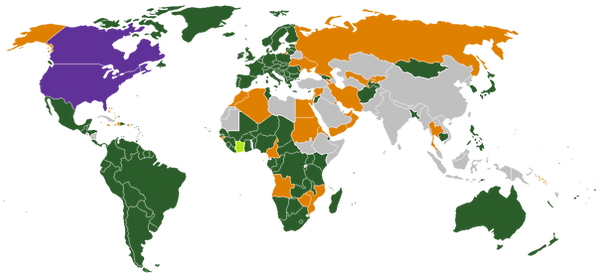
Avg. wingspan: 4.5 – 6.4 cm / 1.8 – 2.5 in.
Diet: caterpillars feed on Paper Birch (Betula papyrifera), False Nettle (Boehmeria cylindrica), Hackberry (Celtis occidentalis), Hops (Humulus), Wood Nettle (Laportea canadensis), Currants and Gooseberries (Ribes spp.), Basswood (Tilia americana), American Elm (Ulmus americana), Nettle (Urtica), and Clearweed (Pilea pumila) and others
Diet: adults feed on rotting fruit, tree sap, animal dung, and will occasionally puddle, to gain necessary salts and minerals. They will also take nectar from flowers infrequently.
Family: Nymphaldae (Brush Footed)
NCGR: G5 - Demonstrably secure globally, though they may be quite rare in parts of its range, especially at the periphery.
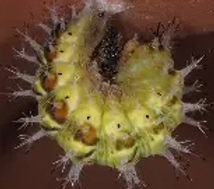
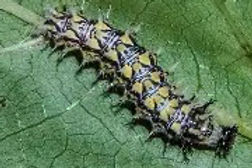

The single biggest threat to butterfly survival is habitat destruction!!
bottom of page